coord-radial
Radial coordinate system.
theta = "x" (default) distributes categories around the circle for rose / radar layouts; theta = "y" turns stacked y values into wedges for pie / donut layouts.
Usage
coord-radial(
  theta: "x",
  start: 0,
  end: none,
  direction: 1,
  clip: false,
)
Parameters
| Parameter | Default | Description |
|---|---|---|
theta |
"x" |
Which axis is angular: "x" (default) or "y". The radial axis (the other one) automatically drops its lo-side expansion to zero so bars meet at radius 0; pass an explicit expand: on the radial scale to override. |
start |
0 |
Offset in radians from 12 o’clock for the first slice. |
end |
none |
Offset in radians from 12 o’clock for the sweep end. none (default) means a full sweep in the requested direction. On a full sweep where the angular domain endpoints land on the same canvas angle, the two ticks merge into a single "end/start" label. |
direction |
1 |
1 (default) advances clockwise; -1 counter-clockwise. |
clip |
false |
false (default) lets marks render past the panel rectangle; true clips. |
Returns
Coordinate dictionary consumed by plot.
Examples
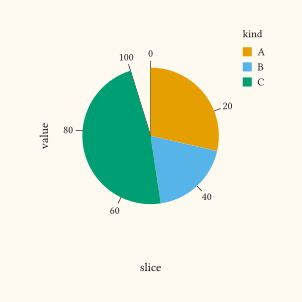
Pie chart from a stacked column.
#let d = (
  (slice: "all", value: 30, kind: "A"),
  (slice: "all", value: 20, kind: "B"),
  (slice: "all", value: 50, kind: "C"),
)
#plot(
  data: d,
  mapping: aes(x: "slice", y: "value", fill: "kind"),
  layers: (geom-col(width: 1, position: "stack"),),
  coord: coord-radial(theta: "y"),
  width: 7cm,
  height: 7cm,
)