stat-bin-hex
Two-dimensional hexagonal bin statistic: partition (x, y) into a pointy-top hex grid and count rows per cell.
bins and binwidth accept either a scalar or an (x, y) pair.
Usage
stat-bin-hex(
  bins: 30,
  binwidth: none,
)
Parameters
| Parameter | Default | Description |
|---|---|---|
bins |
30 |
Scalar or (x, y) pair — target bin counts. |
binwidth |
none |
Scalar or (x, y) pair — fixed pitches. |
Returns
Statistic object with name: "bin-hex".
Outputs
x.y._count._density.
Examples
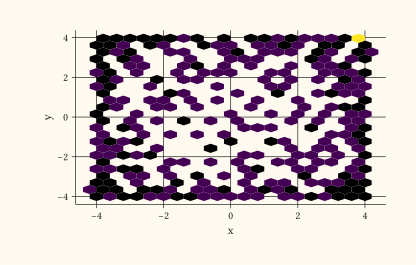
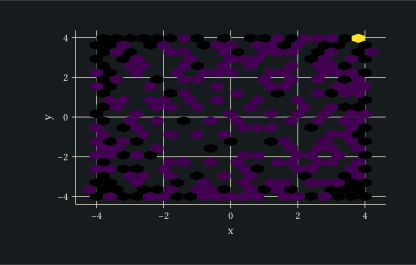
stat-bin-hex powers geom-hex; pass bins (or binwidth) through the wrapper to bin a noisy scatter onto a 20-bin hex grid coloured by count.
#let d = range(0, 400).map(i => (
  x: calc.sin(i * 0.13) * 4,
  y: calc.cos(i * 0.21) * 4,
))
#plot(
  data: d,
  mapping: aes(x: "x", y: "y"),
  layers: (geom-hex(bins: 20),),
  scales: scales(fill: scale-viridis-c()),
  width: 10cm,
  height: 6cm,
)