geom-blank
Invisible layer used to extend trained scales without drawing marks.
Typical mappings are x and / or y; any aesthetic in the mapping participates in scale training so the panel reserves room for the implied range.
Usage
geom-blank(
  mapping: none,
  data: none,
  stat: "identity",
  position: "identity",
  key: auto,
  inherit-aes: true,
)
Parameters
| Parameter | Default | Description |
|---|---|---|
mapping |
none |
Layer-specific aesthetic mapping built with aes. Falls back to the plot mapping when none. |
data |
none |
Layer-specific dataset, or a function applied to the plot data returning the layer frame. Falls back to the plot data when none. |
stat |
"identity" |
Statistical transform name or stat object. |
position |
"identity" |
Position adjustment name. Usually left at "identity". |
key |
auto |
Legend glyph override built with a draw-key-* helper. auto picks the default for the geom. |
inherit-aes |
true |
Whether to merge the plot-level mapping into this layer’s mapping. |
Returns
Layer dictionary consumed by plot.
Examples
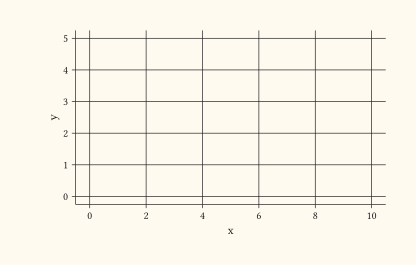
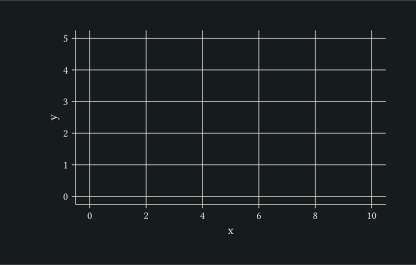
Two corner rows train the axes without drawing any marks.
#let frame = ((x: 0, y: 0), (x: 10, y: 5))
#plot(
  data: frame,
  mapping: aes(x: "x", y: "y"),
  layers: (geom-blank(),),
  width: 10cm,
  height: 6cm,
)
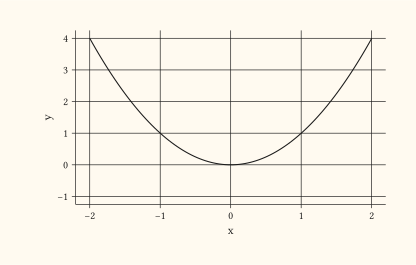
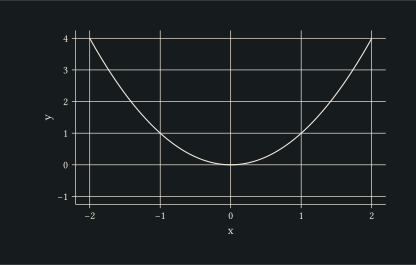
Stack a blank under geom-function to reserve room for the curve’s domain without overriding the function output.
#let frame = ((x: -2, y: -1), (x: 2, y: 4))
#plot(
  data: frame,
  mapping: aes(x: "x", y: "y"),
  layers: (
    geom-blank(),
    geom-function(fun: x => x * x),
  ),
  width: 10cm,
  height: 6cm,
)